GOAT AND SHEEP MICROCLIMATE AND LIGHTING
Optimal environmental conditions for a healthy and productive system
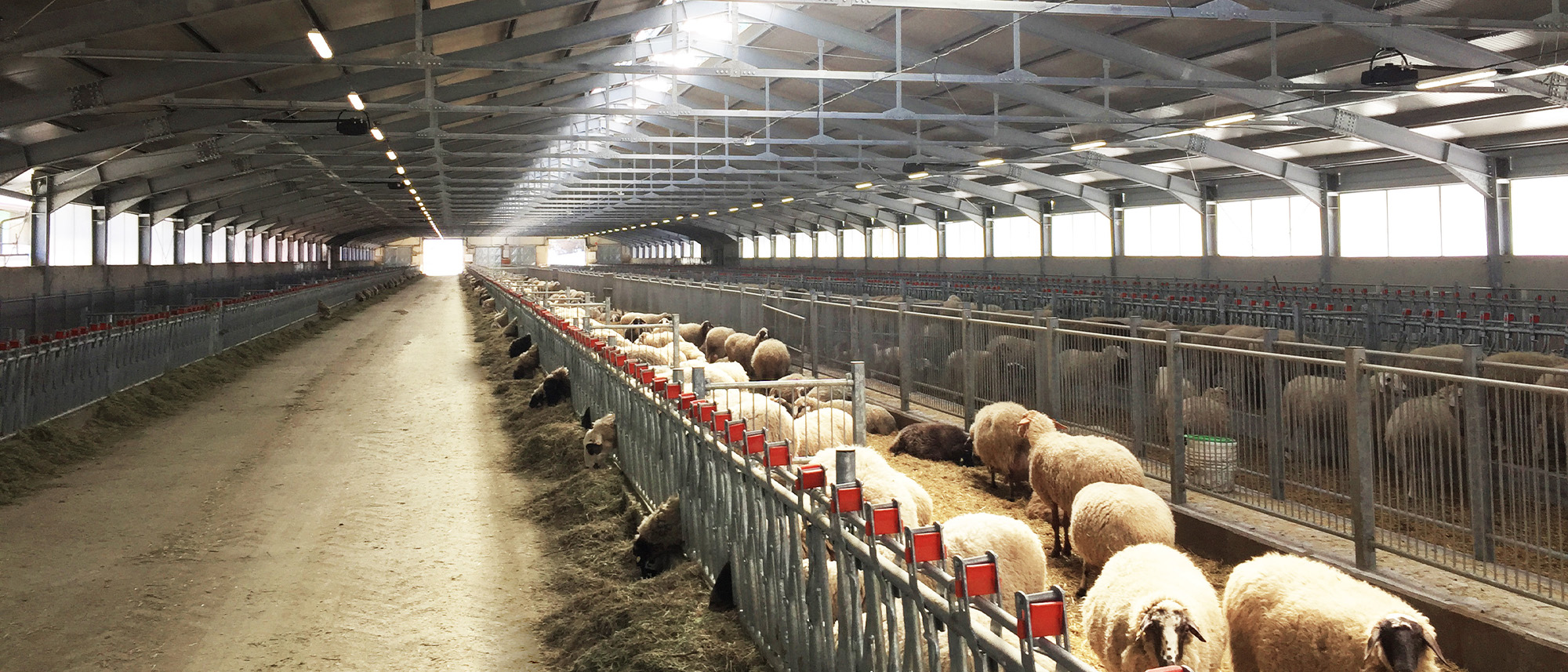
Proper climate control in livestock housing ensures optimal environmental conditions for the animals and is the foundation of successful farming.

BEST PRACTICES
Why is air exchange so important?
To keep the environment dry, reduce harmful gases and humidity, and protect animals from conditions that could compromise health and productivity.
NATURAL OR FORCED VENTILATION
How to maintain a perfect microclimate
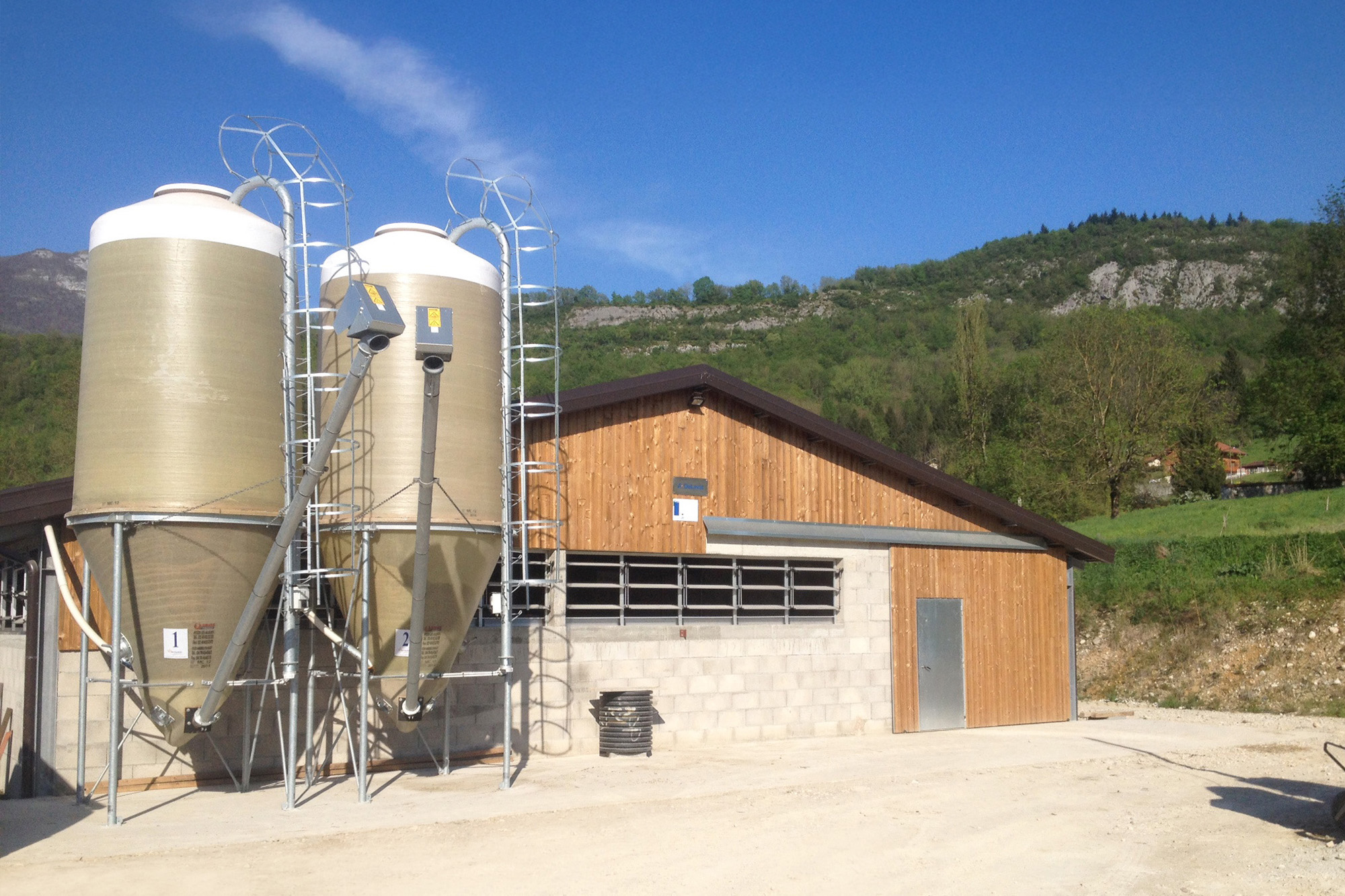
Maintaining an optimal microclimate is ensured by natural or forced ventilation systems, designed according to the structure and the farm’s needs. Windows, adjustable openings, and ventilation chimneys promote controlled natural air exchange, while windbreak nets and fixed or movable closures allow environmental conditions to be regulated.
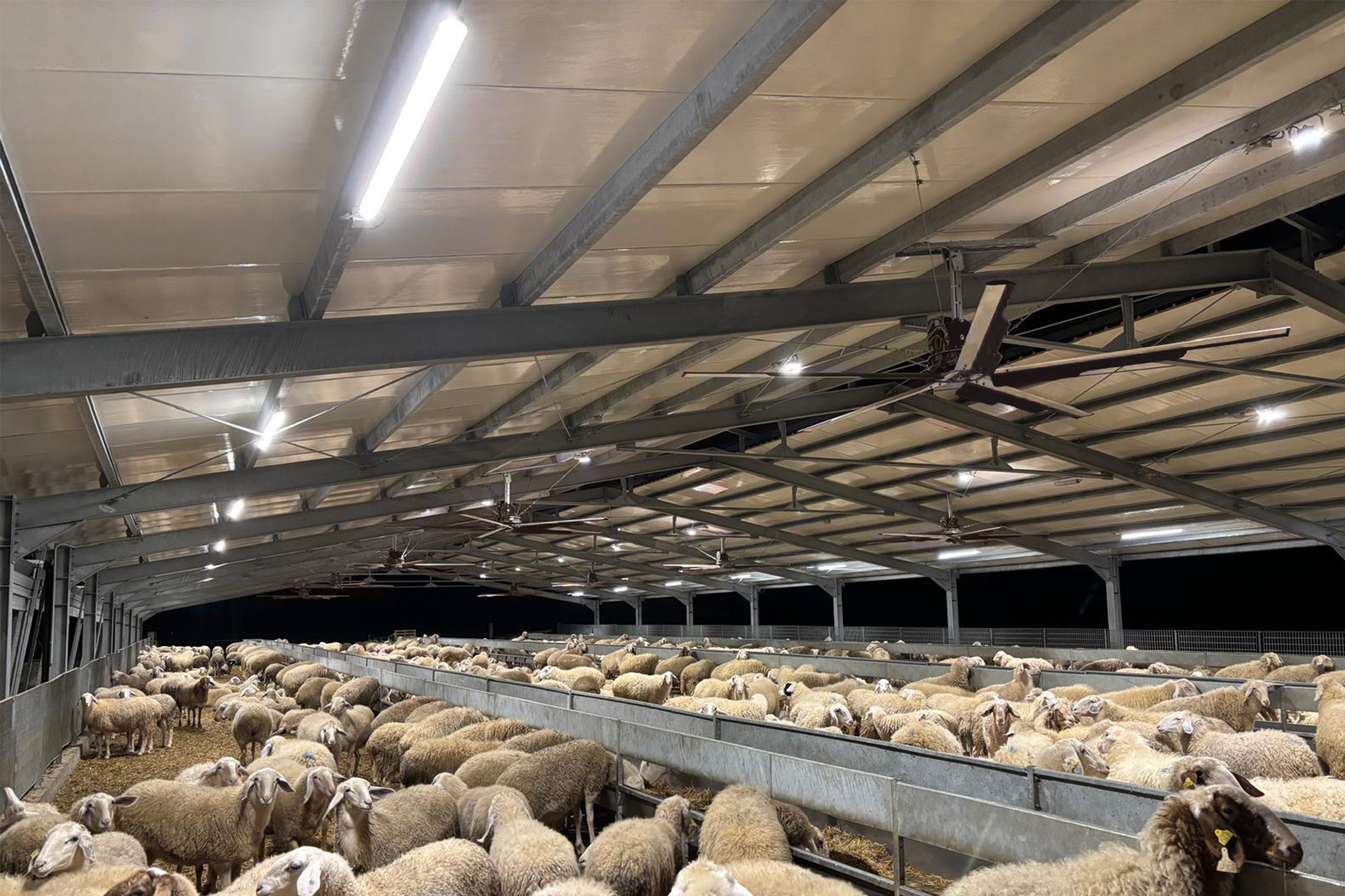
In more advanced settings, cooling, heating, and BIG FAN ventilation systems are used for complete and efficient environmental control.
ADAPTABILITY OF DESIGN CHOICES
Solutions tailored to the climatic context
The construction type of housing for sheep and goats must always be adapted to the local climatic conditions, in order to ensure maximum protection from weather elements and cold, damp winds.
Depending on the context, different solutions are adopted:
- Fully enclosed buildings or insulated structures with doors and windows in foothill and hilly areas
- Buildings closed on two or three sides, with a south-facing opening in mild climate zones
- Semi-open or open buildings in plains and areas not exposed to persistent winds
Ideal temperatures for sheep and goats
Lactating goats require temperatures between 8 and 16°C, with relative humidity of 70–80%. Ideal air exchange is 30 m³/h in winter and 130 m³/h in summer, with an airspeed of around 1 m/s.
Replacement animals perform best at temperatures between 6 and 14°C, with humidity of 70–80%, and air exchange rates of 20 m³/h in winter and 120 m³/h in summer. Airspeed should not exceed 0.5 m/s.
Lambs require temperatures between 8 and 15°C and relative humidity of 70–80%. Optimal air exchange is 10 m³/h in winter and 50 m³/h in summer, with airspeed kept at 0.5 m/s.
Rams require temperatures between 6 and 14°C, relative humidity of 70–80%, with air exchange rates of 50 m³/h in winter and 150 m³/h in summer. The recommended airspeed is 1 m/s.
LIGHTING: BEST PRACTICES
Photoperiod and welfare
Goats and sheep are seasonal photoperiodic animals: day length influences reproductive cycles and milk production.
- Long photoperiod (16 hours of light, 8 hours of darkness) → stimulates lactation and helps maintain production curves
- Short photoperiod (8 hours of light, 16 hours of darkness) → can be useful during dry periods or replacement phases, supporting the restoration of physiological conditions
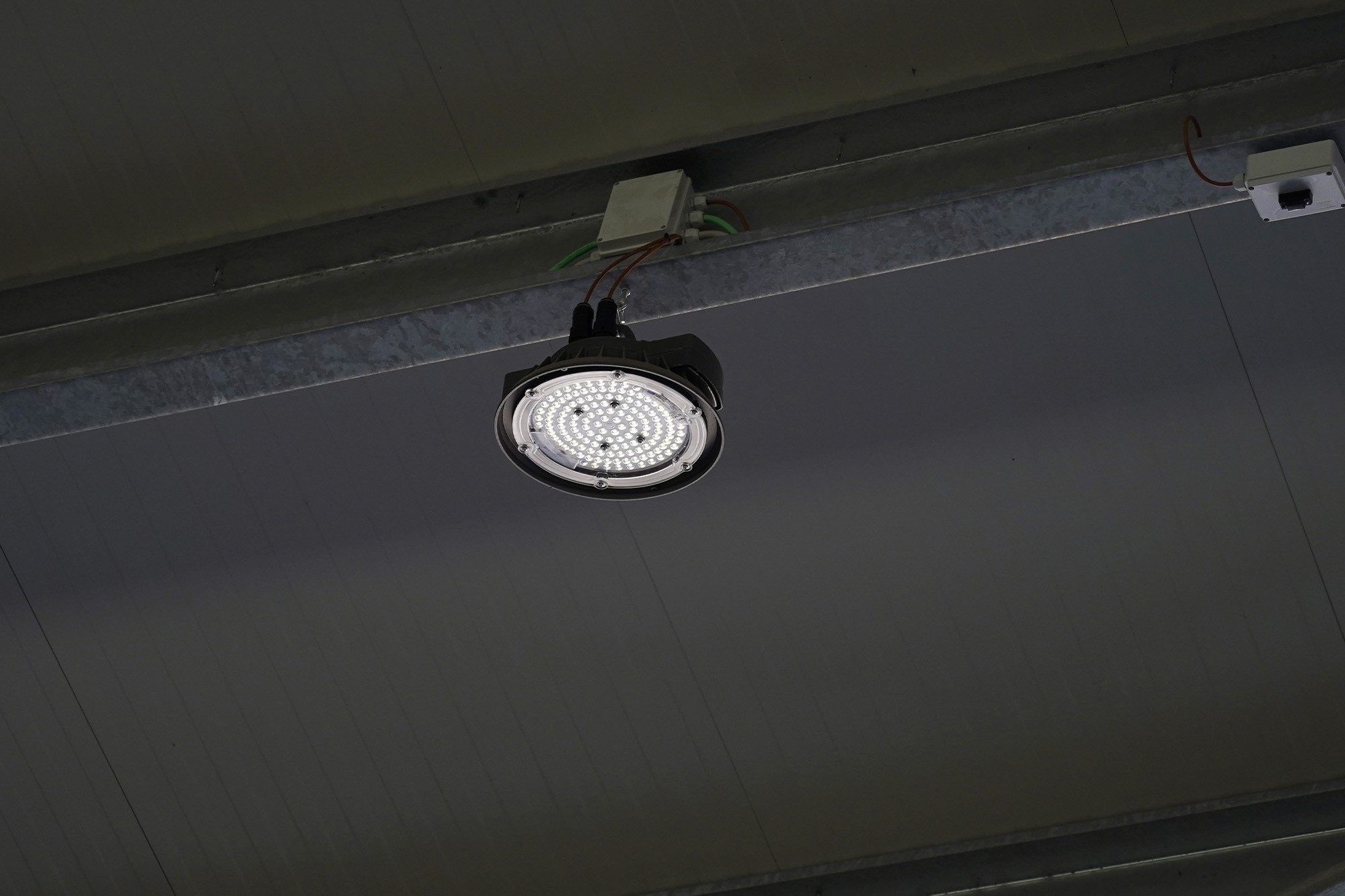
LIGHTING
How proper photoperiod management improves farm performance
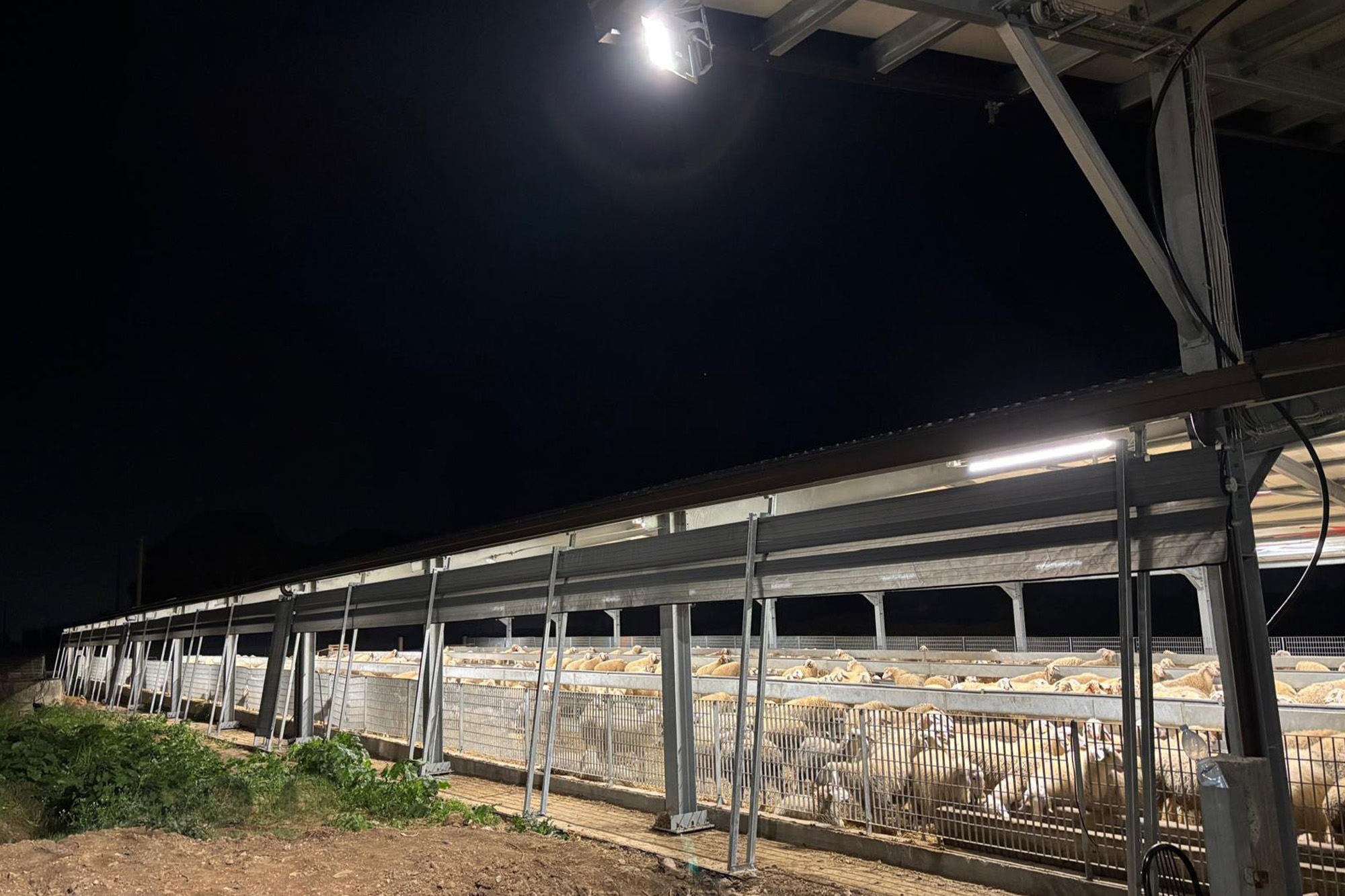
Lighting plays a key role in the management of sheep and goat farming, influencing animal welfare, behavior, and productivity. A proper balance between natural and artificial light ensures optimal conditions for both animals and operators.
ADVICE
Request a consultation
Please do not hesitate to contact us.
Rota Guido’s technical and sales team is at your complete disposal for any enquiries or information you may require.